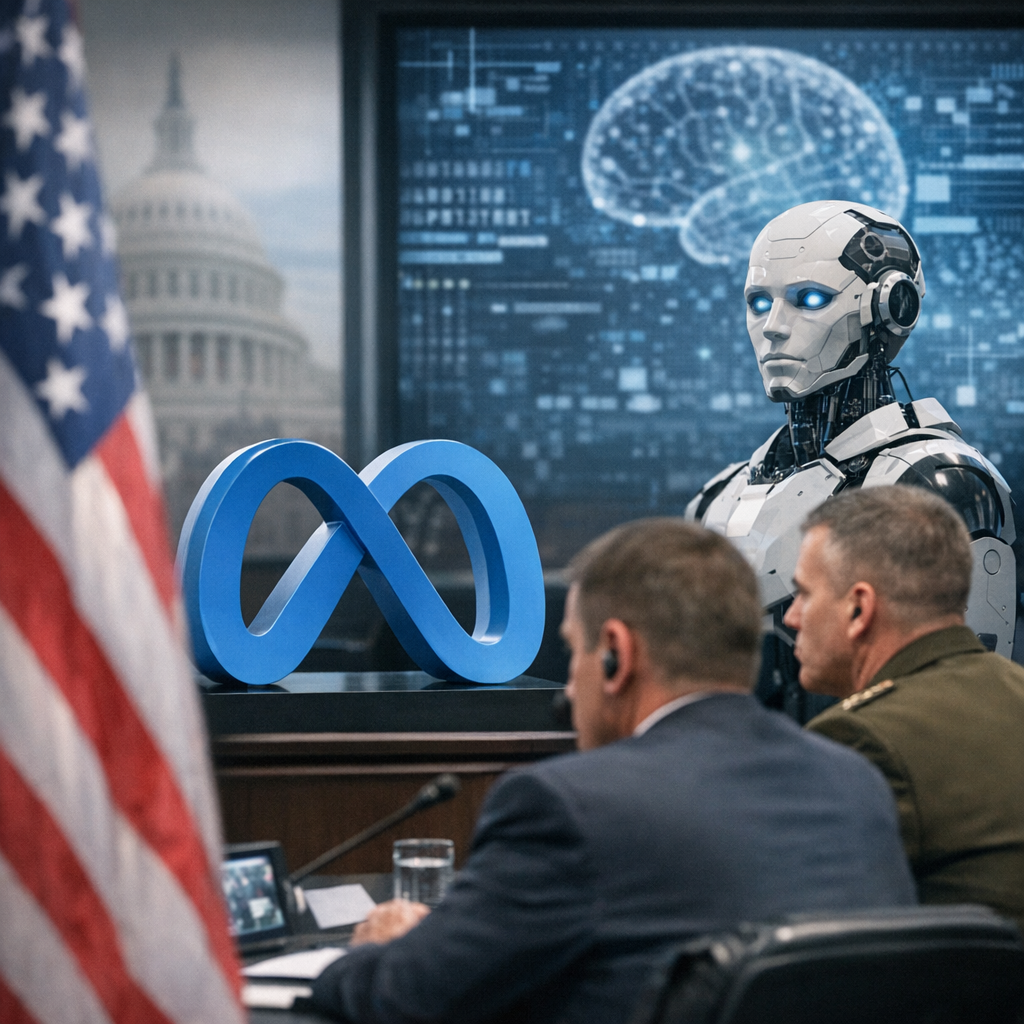
U.S. officials are intensifying efforts to bring greater oversight to artificial intelligence development at Meta Platforms, reflecting mounting concern about the national security implications of rapidly advancing AI systems. According to a report published by The Economic Times, policymakers are urging the company to submit to more formalized government-aligned review mechanisms aimed at evaluating potential risks tied to its AI technologies.
The push comes at a time when generative AI capabilities are accelerating across the tech sector, with major firms racing to deploy increasingly powerful models. Officials in Washington are particularly focused on how such tools could be exploited for disinformation, cyberattacks, or other forms of misuse, especially if adequate safeguards are not in place, as highlighted in frameworks like the NIST AI Risk Management Framework. Meta, which has invested heavily in open and semi-open AI models, has drawn scrutiny for its approach compared with competitors that maintain tighter controls over access.
According to the report, U.S. authorities are advocating for a structured review process that would allow independent or government-linked entities to assess the safety and security implications of Meta’s AI systems before and after deployment. The proposal reflects broader discussions within the administration about establishing consistent standards for AI governance, similar to principles outlined in the AI Bill of Rights, particularly for technologies that could have dual-use applications.
Meta has previously argued that open innovation can foster transparency and accelerate beneficial uses of AI, a stance reflected in its Llama AI model initiatives. However, critics within government agencies and policy circles worry that openness may also lower barriers for malicious actors seeking to exploit advanced tools. The tension between innovation and security has become a central theme in ongoing regulatory debates, also discussed in reports from organizations like the Brookings Institution.
The Economic Times report indicates that while Meta has engaged with policymakers on AI safety issues, it has not fully committed to the kind of external review framework being proposed. Any agreement would likely need to balance commercial interests, intellectual property considerations, and compliance costs alongside national security priorities.
The developments underscore a broader shift in U.S. policy, as regulators move from general principles toward more concrete mechanisms for oversight. In recent months, federal agencies have increased coordination on AI governance, with a focus on ensuring that leading companies adopt risk assessment protocols comparable to those used in other high-stakes industries, as emphasized by the Department of Homeland Security’s AI roadmap.
For Meta, the outcome of these discussions could shape both its AI strategy and its relationship with regulators. For policymakers, the negotiations represent a test case in whether voluntary cooperation from major technology firms can deliver meaningful safeguards, or whether more formal regulatory action will ultimately be required.