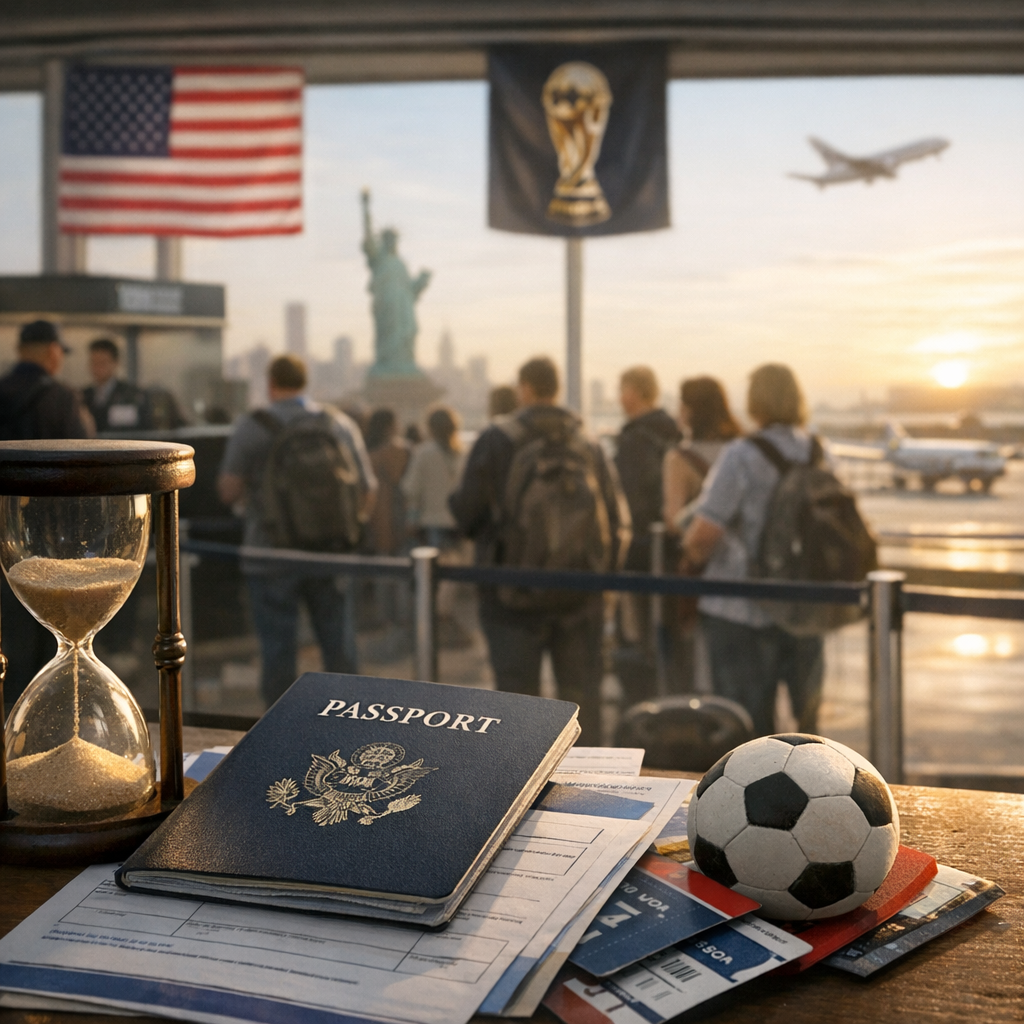
As the United States prepares to host matches for the 2026 FIFA World Cup, concerns are mounting that restrictive visa policies and processing delays could prevent thousands of international fans from attending the tournament. The issue was examined in Wired’s article, “Locked Out of the World Cup: America’s Visa Problem Could Keep Fans Away,” which highlights the growing tension between global sporting ambitions and domestic immigration systems.
The United States, alongside Canada and Mexico, will host the expanded 48-team tournament, an event expected to draw millions of visitors. However, immigration experts, former officials, and event organizers warn that the current visa framework is ill-equipped to handle a sudden surge in demand. Long wait times for visitor visas, in some countries stretching well beyond a year, are already raising questions about accessibility for fans hoping to travel. According to the U.S. Department of State visa wait time data, delays remain significant in many regions.
In many regions where soccer is most popular, including parts of Africa, South America, and Asia, applicants face significant structural barriers. US consulates in these areas are often understaffed and overburdened, leading to delays that could outlast the tournament itself. For prospective visitors who must navigate interviews, documentation requirements, and high rejection rates, attending the World Cup may be unrealistic. Broader immigration trends tracked by organizations like the Migration Policy Institute show persistent disparities in visa access.
The Wired report underscores that the challenge is not new but has been exacerbated by pandemic-era backlogs and staffing shortages. While the State Department has taken steps to reduce wait times, progress remains uneven. Some countries have seen modest improvements, while others continue to struggle with limited appointment availability. Efforts to address pandemic-related backlogs have been noted in official updates from the U.S. Department of State.
There are also broader diplomatic and economic implications. Major international sporting events are often viewed as opportunities to strengthen global ties and showcase national openness. Analysts warn that if large numbers of fans are unable to attend, it could undermine the United States’ image as an accessible host and dampen the tournament’s cultural impact, a concern often raised in global event analyses by groups such as the Brookings Institution.
Organizers and advocacy groups have called for temporary policy adjustments, including expedited visa processing for ticket holders and expanded consular resources. Similar measures have been implemented by past host countries to facilitate travel during major events. Guidance on visa categories and temporary travel provisions can also be found through U.S. Citizenship and Immigration Services. However, changes have yet to be formalized, and immigration policy remains politically sensitive.
The situation presents a logistical paradox: while the United States is gearing up to stage one of the largest sporting events in history, its entry system may limit who can participate in person. As the countdown to 2026 continues, the question of whether global fans will be able to attend in meaningful numbers remains unresolved, with significant consequences for both the tournament and the country’s standing on the world stage.