

Apple did not build a trillion-dollar hardware empire by letting someone else own the most important software running on its devices. Now, according to a discussion on The Verge, that instinct is driving the company toward a direct confrontation with OpenAI — one that could reshape which AI model billions of iPhone users interact with every single day.
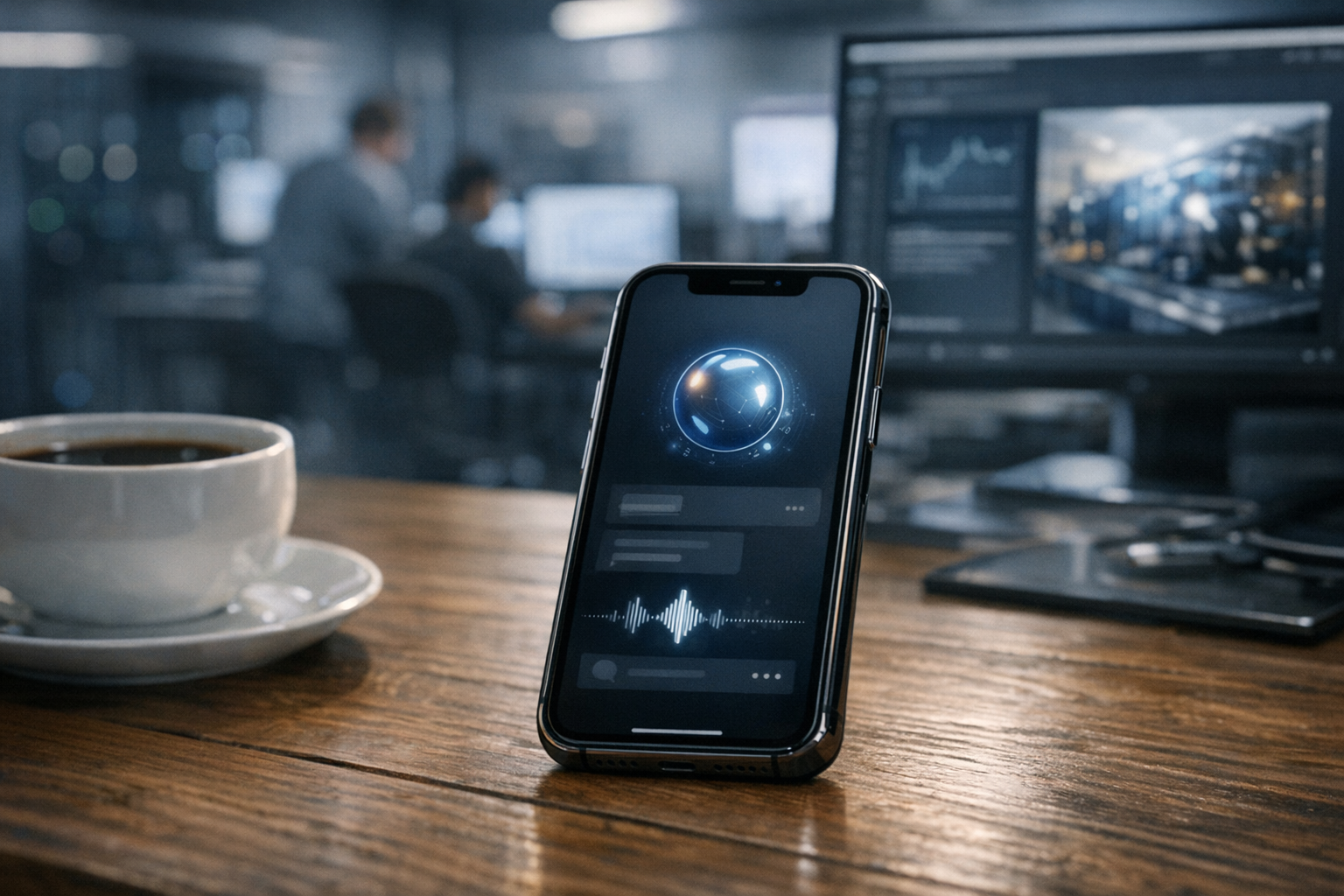
The situation is straightforward and the stakes are enormous. Apple currently ships ChatGPT integration as part of Apple Intelligence, the AI feature suite it introduced with iOS 18. OpenAI gets prime real estate inside the world’s most profitable consumer device. But Apple is not comfortable with that arrangement lasting any longer than it has to.
Apple Intelligence Was Never Meant to Be OpenAI’s Forever Home
Apple’s longer-term plan, as reported by The Verge, centers on reducing and eventually eliminating its dependence on OpenAI by building out its own large language model capabilities powerful enough to handle the queries it currently offloads to ChatGPT. The partnership was always a stopgap — a way to ship something compelling while Apple’s own models caught up. The company has the silicon advantage, with its Neural Engine chips already optimized for on-device inference, and it has the privacy narrative that enterprise and consumer users increasingly care about.
What Apple also has is leverage. It controls the distribution channel. OpenAI does not have an iPhone; it has an app on Apple’s App Store and an integration Apple could sunset. For OpenAI, losing that embedded status inside iOS would be a significant blow to its consumer reach, particularly as it competes with Google’s Gemini, Anthropic’s Claude, and a field that is not getting less crowded. The dynamic is uncomfortably familiar for any company that has built a business on top of Apple’s platform and later found itself squeezed out.
A Legal Wrinkle Makes the Rivalry Messier
The competitive tension is not playing out purely in product roadmaps. The Verge’s reporting also touches on legal dimensions surfacing between the two companies, adding a combative edge to what was framed publicly as a partnership. Apple and OpenAI are not just rivals in waiting — there is active friction over the terms of how their technology interacts and who benefits from the arrangement.

That friction matters because it signals how quickly the relationship has soured from the fanfare of the Apple Intelligence announcement at WWDC 2024. What looked like a coup for OpenAI — getting ChatGPT embedded at the operating system level of the iPhone — is now looking more like a temporary arrangement Apple is motivated to exit. If Apple succeeds in building a capable proprietary model, OpenAI loses one of its most powerful distribution vectors at exactly the moment it needs consumer scale to justify its stratospheric valuation.
For the broader AI industry, the story is a familiar one playing out at a new scale. Platform owners eventually want to own the stack. As we covered in our look at Fund’s OpenAI moves, the pressure on OpenAI from multiple directions is intensifying — and Apple may be the most formidable threat yet, because it comes with two billion active devices already in hand. The race to control the AI layer of the smartphone is on, and Apple has made clear it intends to win it on its own terms.
For context on how quickly AI is embedding itself into consumer products across industries, our earlier reporting on Netflix’s AI production strategy shows just how fast generative AI is moving from experiment to infrastructure — a shift Apple is clearly betting will define the next decade of the iPhone.
One thought on “Apple Is Building Its Own AI to Push ChatGPT Off the iPhone”