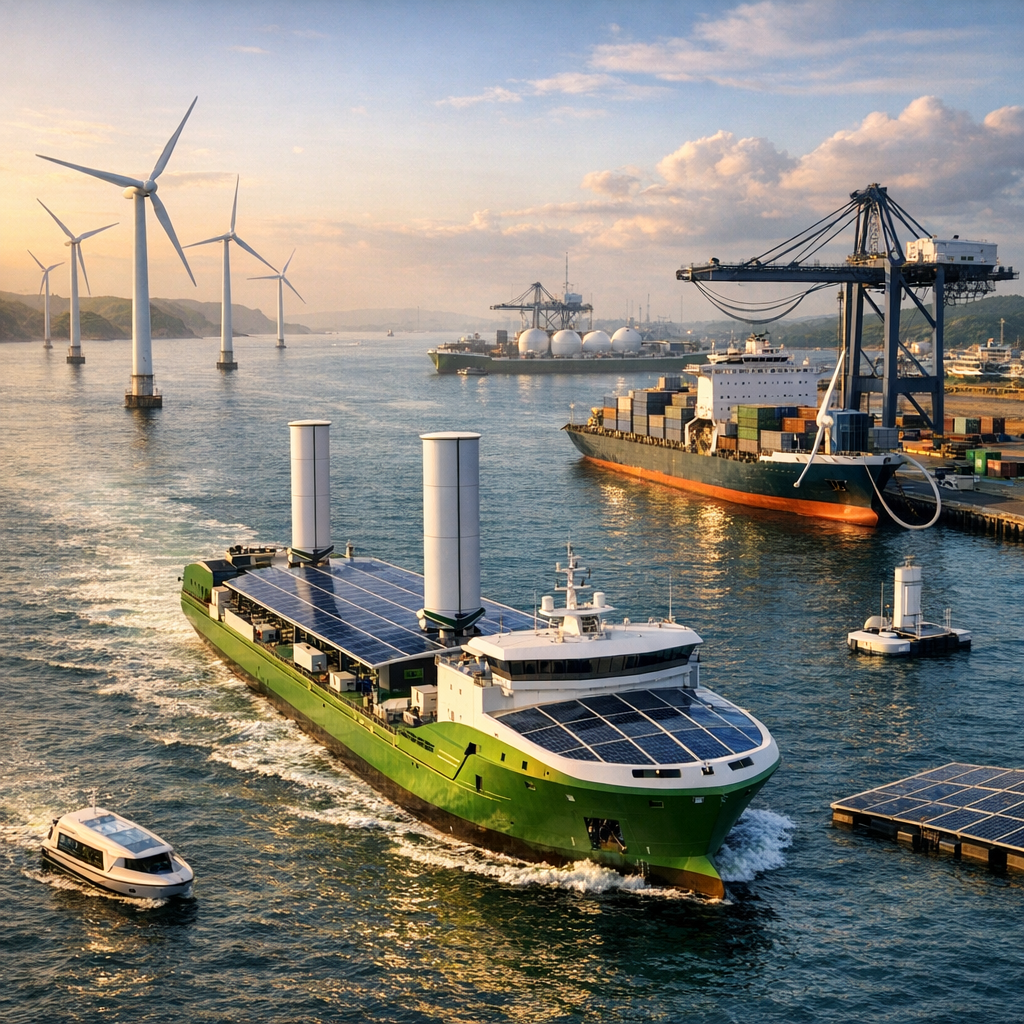
A quiet but consequential transformation is taking shape across the global maritime industry, one that is beginning to dispel what some insiders have long called “ferrynoia”—the lingering skepticism that ships, particularly ferries, could realistically transition away from fossil fuels. As reported in Wired’s article “So Long, Ferrynoia—Green Maritime Technology Is Here”, advances in battery systems, hybrid propulsion, and port infrastructure are now moving from experimental promise to operational reality.
For decades, maritime transport has remained one of the most difficult sectors to decarbonize. Ships are energy-intensive, often operating over long distances with limited opportunities to refuel or recharge. This has made the industry heavily reliant on diesel and other high-emission fuels. According to the International Maritime Organization, shipping accounts for nearly 3% of global greenhouse gas emissions. Yet recent developments, particularly in Northern Europe, suggest that the technical and economic barriers are beginning to erode.
Electric ferries are at the forefront of this shift. Norway, which has positioned itself as a global leader in maritime electrification, has deployed dozens of battery-powered ferries along its rugged coastline, supported by policies from the Norwegian government’s transport strategy. These vessels operate on relatively short routes, allowing them to recharge frequently at ports equipped with high-capacity charging systems. The results have been striking: significant reductions in emissions, lower operating costs over time, and quieter, more efficient journeys.
What was once viewed as a niche or pilot concept is increasingly becoming standard practice. As Wired notes, improvements in battery energy density and charging speed—tracked by groups like the International Energy Agency—have made electric propulsion viable for a wider range of vessels. Meanwhile, advances in hybrid systems are extending the reach of low-emission shipping beyond short routes, enabling ships to combine battery power with alternative fuels such as hydrogen or biofuels.
Crucially, the economic case is strengthening. While the upfront cost of electric and hybrid vessels remains higher than conventional ships, operators are finding that reduced fuel consumption, lower maintenance needs, and regulatory incentives can offset the initial investment. Governments, particularly in Europe, have accelerated this trend through mandates and subsidies aligned with frameworks like the EU’s FuelEU Maritime initiative aimed at cutting maritime emissions.
Infrastructure remains a key challenge. Ports must be upgraded to handle high-voltage charging and, in some cases, new fueling systems for hydrogen or other alternatives. This requires coordinated investment across public and private sectors. Efforts led by organizations such as the International Renewable Energy Agency highlight the scale of infrastructure transformation needed. However, progress is underway, with several countries integrating maritime electrification into broader climate and transportation strategies.
The implications extend beyond ferries. Lessons learned from short-haul electrification are informing efforts to decarbonize larger vessels, including cargo ships and tankers. While fully electric transoceanic shipping remains out of reach for now, hybrid models and alternative fuels are gaining traction, signaling a broader shift in how the industry approaches sustainability.
Still, uncertainties remain. The pace of adoption will depend on regulatory alignment, technological breakthroughs, and the willingness of shipowners to commit capital to new systems. There are also questions about supply chains for batteries and alternative fuels, as well as the environmental impact of scaling up these technologies.
Even so, the tone within the industry has shifted. Where doubt once dominated, there is now a growing sense of inevitability about the transition. As Wired’s reporting suggests, the era of “ferrynoia” may indeed be ending, replaced by a more pragmatic recognition that green maritime technology is not only possible, but already underway.