The growing use of live facial recognition technology on London’s streets is intensifying a long-running debate over public safety and civil liberties, as law enforcement agencies expand trials aimed at identifying wanted individuals in real time. The issue was recently examined in the Economic Times article “On London’s streets, facial recognition tests the balance between security and liberty,” which highlights both the operational ambitions of police and the concerns voiced by privacy advocates.
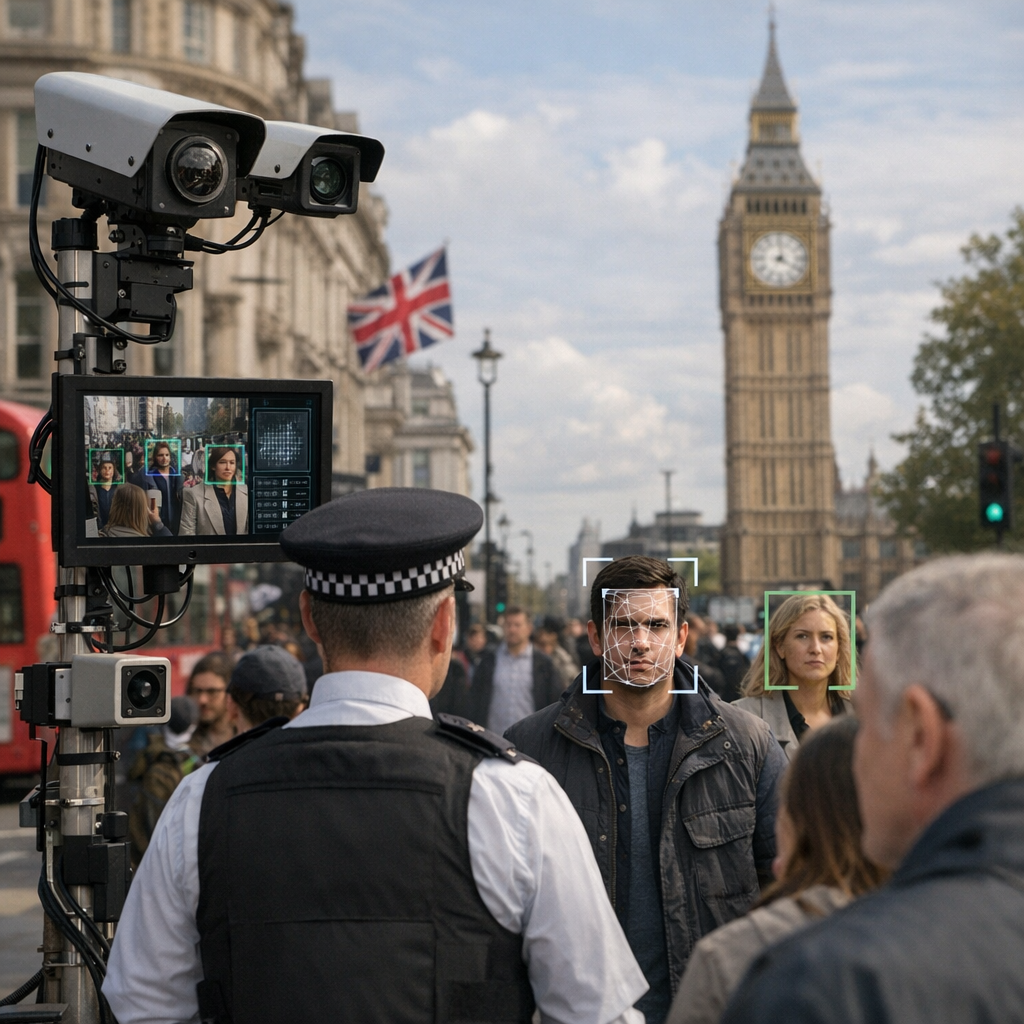
Metropolitan Police officers have increasingly deployed live facial recognition cameras at busy transport hubs and commercial areas, scanning faces against watchlists of individuals sought for crimes ranging from theft to serious violence. Authorities argue that the technology offers a pragmatic response to rising urban crime, enabling quicker identification than traditional methods and potentially acting as a deterrent. Officials have pointed to successful matches in previous deployments, saying the system helps remove repeat offenders from the streets.
Yet the expansion of such surveillance tools has triggered renewed scrutiny from civil liberties groups, legal experts, and some lawmakers. Critics contend that the technology risks normalizing mass surveillance without sufficient public consent or oversight. Concerns center not only on privacy but also on accuracy, particularly the potential for false positives that could disproportionately affect minority communities. Advocacy groups have warned that even a small error rate could translate into significant real-world consequences when applied at scale in densely populated areas.
The legal footing for live facial recognition in the United Kingdom has evolved through a patchwork of court rulings and regulatory guidance rather than comprehensive legislation. While past judgments have allowed its use under certain conditions, they have also emphasized the need for clear safeguards, transparency, and accountability. Campaigners argue that current frameworks remain inadequate, calling for stricter limits on when and how the technology can be deployed, as well as independent oversight mechanisms.
Police officials maintain that deployments are conducted within existing legal boundaries and subject to internal review processes. They also emphasize that watchlists are curated and that human officers make final decisions following any algorithmic match. Nonetheless, the opacity surrounding operational details, including the criteria for inclusion on watchlists and data retention practices, continues to fuel skepticism.
Public reaction has been mixed. Some residents express cautious support, particularly in areas with visible crime concerns, while others voice unease about being monitored in everyday settings without explicit consent. The presence of clearly marked police units during deployments has not fully alleviated fears that such practices could become a routine feature of urban life.
The broader debate reflects a familiar tension in modern policing: how to harness emerging technologies to enhance security without eroding fundamental rights. As trials continue and the scale of deployment grows, pressure is mounting on policymakers to establish clearer rules governing facial recognition. Whether the United Kingdom ultimately embraces, restricts, or recalibrates its approach may hinge on how convincingly authorities can demonstrate both the effectiveness of the technology and their commitment to safeguarding civil liberties.