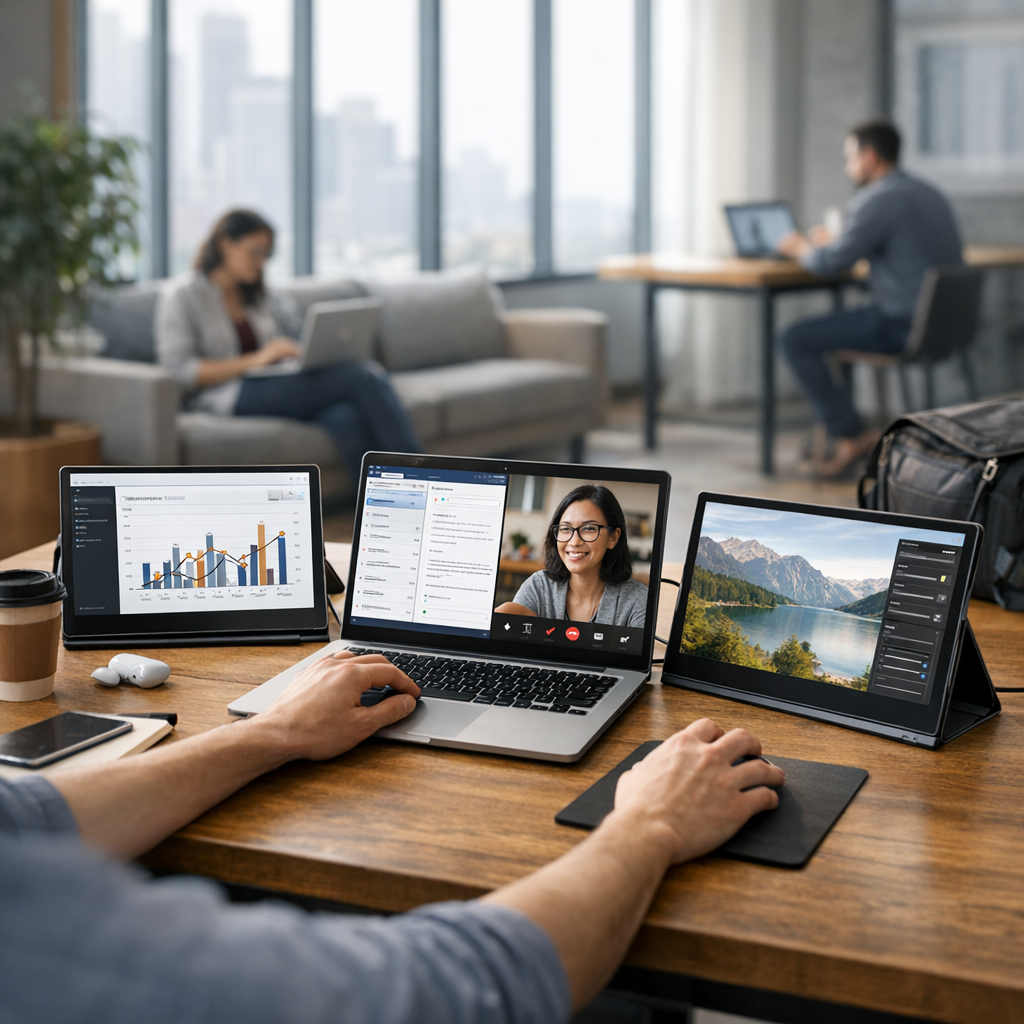
A recent roundup by Wired, titled “The Best Portable Monitors”, underscores a quiet but notable shift in how people are working across locations, devices, and environments. As remote and hybrid work continue to reshape daily routines—trends documented by sources like Pew Research Center—portable monitors, once niche accessories, are gaining traction as practical tools for both productivity and convenience.
The Wired guide surveys a growing market of lightweight, travel-friendly displays designed to extend the functionality of laptops, tablets, and even smartphones. These devices are increasingly positioned not just for digital nomads, but also for office workers seeking flexible setups, students managing limited desk space, and creative professionals requiring additional screen real estate on demand.
Manufacturers are responding with a wide range of options that prioritize portability without entirely sacrificing performance. Many of the models highlighted by Wired feature slim profiles, USB-C connectivity, and minimal setup requirements, allowing users to carry a second screen in a backpack and deploy it within seconds. Battery-free designs that draw power directly from connected devices have become standard, reducing the need for additional cables and chargers.
At the same time, the category is diversifying in terms of display quality and specialized use cases. Higher-end portable monitors now offer OLED panels, improved color accuracy, and faster refresh rates, making them viable for photo editing, video production, and even gaming—areas often associated with standards from organizations like Adobe’s color grading tools. Touchscreen capabilities and built-in stands or covers that double as mounts further expand their versatility, blurring the line between accessory and primary device.
Wired’s assessment also points to trade-offs that continue to define the segment. While premium models can approach the performance of traditional desktop monitors—benchmarks often evaluated by sites like Tom’s Hardware—they often do so at significantly higher prices. Entry-level options, meanwhile, may compromise on brightness, build quality, or resolution. The publication notes that choosing the right device depends heavily on individual needs, whether that means prioritizing portability above all else or seeking a balance between mobility and visual fidelity.
Beyond hardware considerations, the rise of portable monitors reflects broader changes in how people conceptualize workspaces. Instead of fixed desks with permanent equipment, users are increasingly assembling modular setups that can be adapted to different environments—kitchen tables, co-working spaces, or airport lounges. In that context, a portable second screen becomes less of a luxury and more of a functional extension of everyday computing.
The Wired article suggests that this trend is likely to accelerate as manufacturers refine designs and as more users embrace flexible work arrangements, a shift also noted in workplace analyses from McKinsey & Company. With improvements in connectivity standards and display technology, portable monitors are positioned to become a staple accessory rather than an occasional convenience.
In highlighting both the strengths and limitations of current offerings, Wired’s “The Best Portable Monitors” presents a market in transition—one that is evolving rapidly alongside the changing nature of work itself.