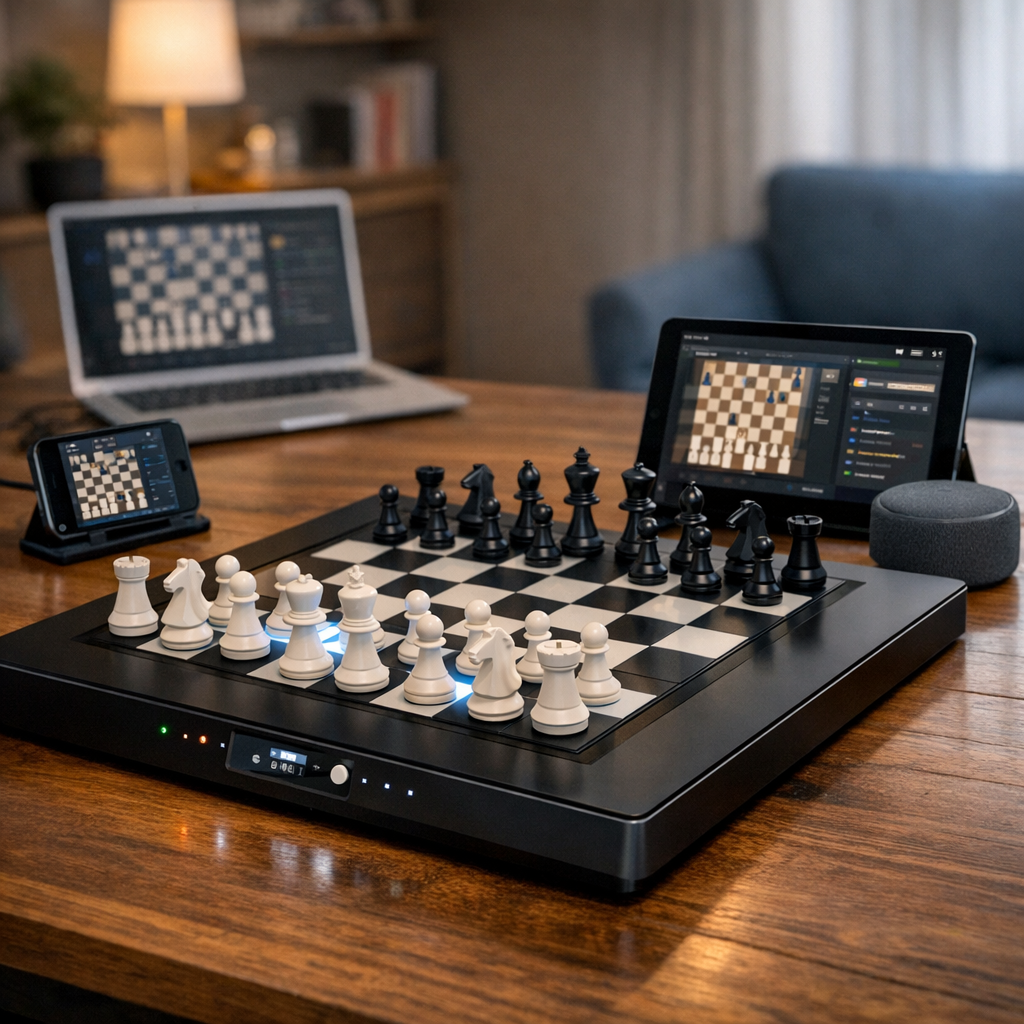
A recent roundup published by Wired, titled “The Best Smart Chess Boards”, highlights a growing niche in consumer technology: connected, sensor-enabled chessboards that blend traditional over-the-board play with digital capabilities. The article surveys several leading products and reflects a broader trend in which classic pastimes are being reimagined through software integration, artificial intelligence, and online connectivity.
At their core, smart chessboards aim to preserve the tactile appeal of wooden pieces and physical gameplay while removing barriers that have historically required screens, keyboards, or manual notation. Many of the devices featured in Wired’s evaluation use embedded sensors to track piece movement automatically, allowing games to be recorded, analyzed, or streamed in real time. Some models incorporate LED lighting to indicate legal moves or suggest training guidance, while others integrate motors that physically move an opponent’s pieces across the board, as seen in products by Square Off.
Wired’s coverage suggests that the appeal of these boards spans a wide spectrum of users, from beginners seeking guided learning experiences to experienced players interested in remote competition without abandoning physical boards. For example, boards paired with companion apps can sync to major online chess platforms like Chess.com and Lichess, enabling players to compete against opponents worldwide while interacting with a tangible board. This hybrid approach has gained traction in a post-pandemic environment where both online play and in-person experiences remain valued.
However, the article also notes that the category is still maturing. Prices for smart chessboards vary significantly, often reflecting differences in build quality, feature sets, and brand reputation. High-end models can cost several hundred dollars, placing them closer to luxury hobbyist items than mainstream consumer electronics. At the same time, more affordable options are entering the market, including offerings from companies like Chessnut, suggesting increasing accessibility as manufacturing and demand evolve.
Wired’s assessment points to usability and reliability as critical differentiators. Issues such as connectivity stability, app design, and sensor accuracy can significantly affect the overall experience. While some boards offer seamless integration and polished software, others struggle with inconsistent performance, underscoring the challenges of blending hardware craftsmanship with modern digital ecosystems.
The article also situates smart chessboards within a resurgence of interest in chess itself, fueled in part by online streaming, educational platforms, and cultural influences, as reflected in the global growth reported by organizations like FIDE (International Chess Federation). As the game attracts new audiences, technology companies and startups are experimenting with ways to modernize the experience without eroding its traditional appeal.
Ultimately, as described in Wired’s “The Best Smart Chess Boards,” the category reflects both innovation and growing pains. Smart boards are not yet essential tools for most players, but they represent a compelling bridge between analog and digital play. Their evolution will likely depend on continued improvements in affordability, software integration, and user experience, as well as sustained interest in a game that has proven remarkably adaptable across centuries.