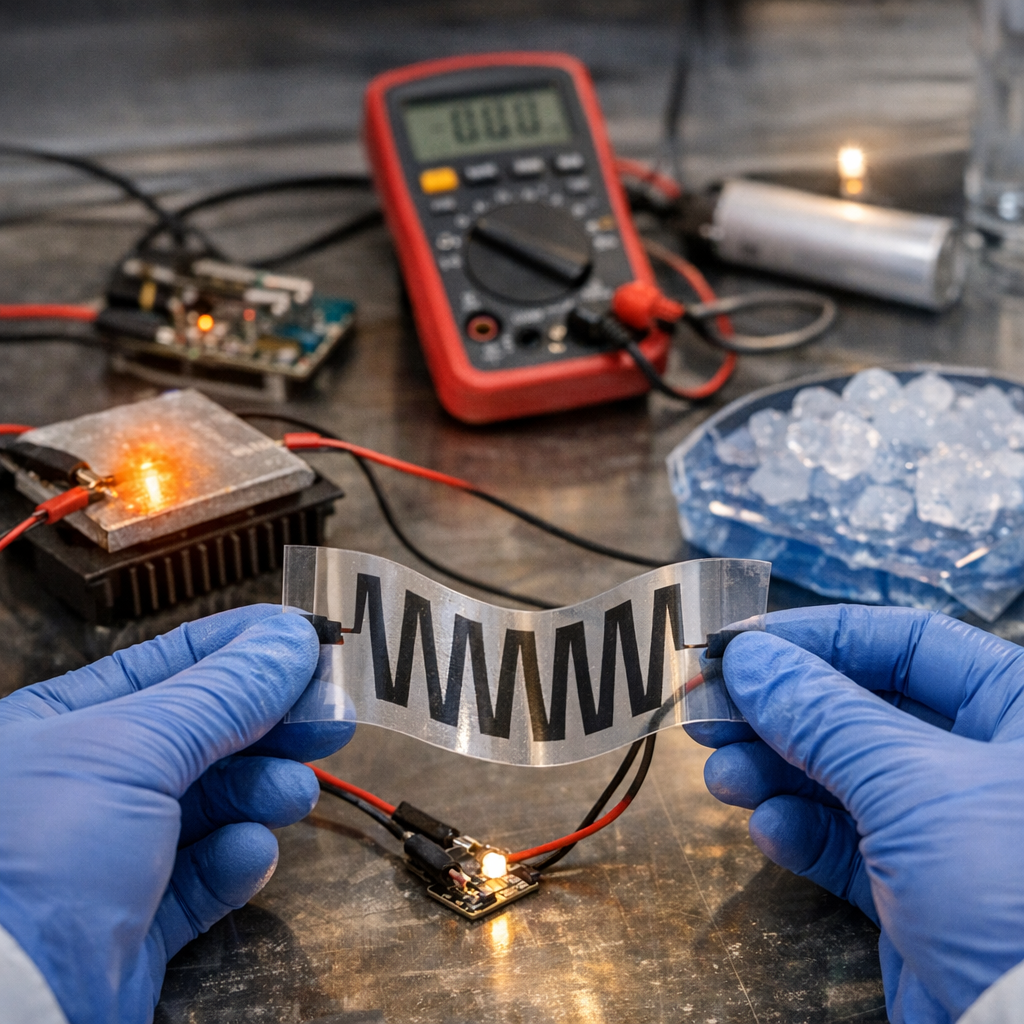
A research team has developed a printable, ink-based thermoelectric material that could open a new path for capturing waste heat and turning it into usable electricity, according to a report published by Tech Xplore titled “Ink-based thermoelectric technology offers solution …”.
Thermoelectric devices, which convert temperature differences directly into electrical energy, have long been seen as a promising tool for improving energy efficiency. However, conventional materials used in such systems are often expensive, rigid, or difficult to scale, limiting their broader application. The newly reported approach aims to overcome those barriers by formulating thermoelectric compounds into an ink that can be deposited using relatively simple manufacturing techniques.
The research focuses on tailoring the composition and microstructure of the ink so that, once printed and processed, it retains the electronic properties needed for efficient energy conversion. By enabling the material to be deposited on flexible or irregular surfaces, the method could expand the range of environments where thermoelectric generators can be deployed, including wearable electronics, industrial equipment, and even building materials.
One of the central challenges in thermoelectric development is balancing electrical conductivity with low thermal conductivity to maintain a temperature gradient. The researchers report that their ink formulation achieves this balance through careful control of particle distribution and binding agents, allowing the printed structures to perform comparably to more traditional bulk materials. At the same time, the printing approach reduces material waste and could lower production costs.
The implications are particularly significant for recovering low-grade waste heat, which is abundant in industrial processes but often too diffuse or difficult to harness using conventional technologies. A printable thermoelectric layer could be applied directly to hot surfaces, turning otherwise lost energy into supplemental power without major infrastructure changes.
Despite the promise, further work is needed before the technology can be commercialized. Durability, long-term stability, and scalability remain key questions, especially for applications that involve continuous thermal cycling or exposure to harsh conditions. Researchers are also working to improve the efficiency of the materials to make them competitive with existing energy-harvesting solutions.
Still, the development highlights a broader trend toward adaptable, low-cost energy technologies that can be integrated into everyday environments. As described in Tech Xplore’s coverage, the ink-based approach represents a potential step forward in making thermoelectric systems more practical and accessible, particularly in scenarios where traditional rigid devices would be impractical.