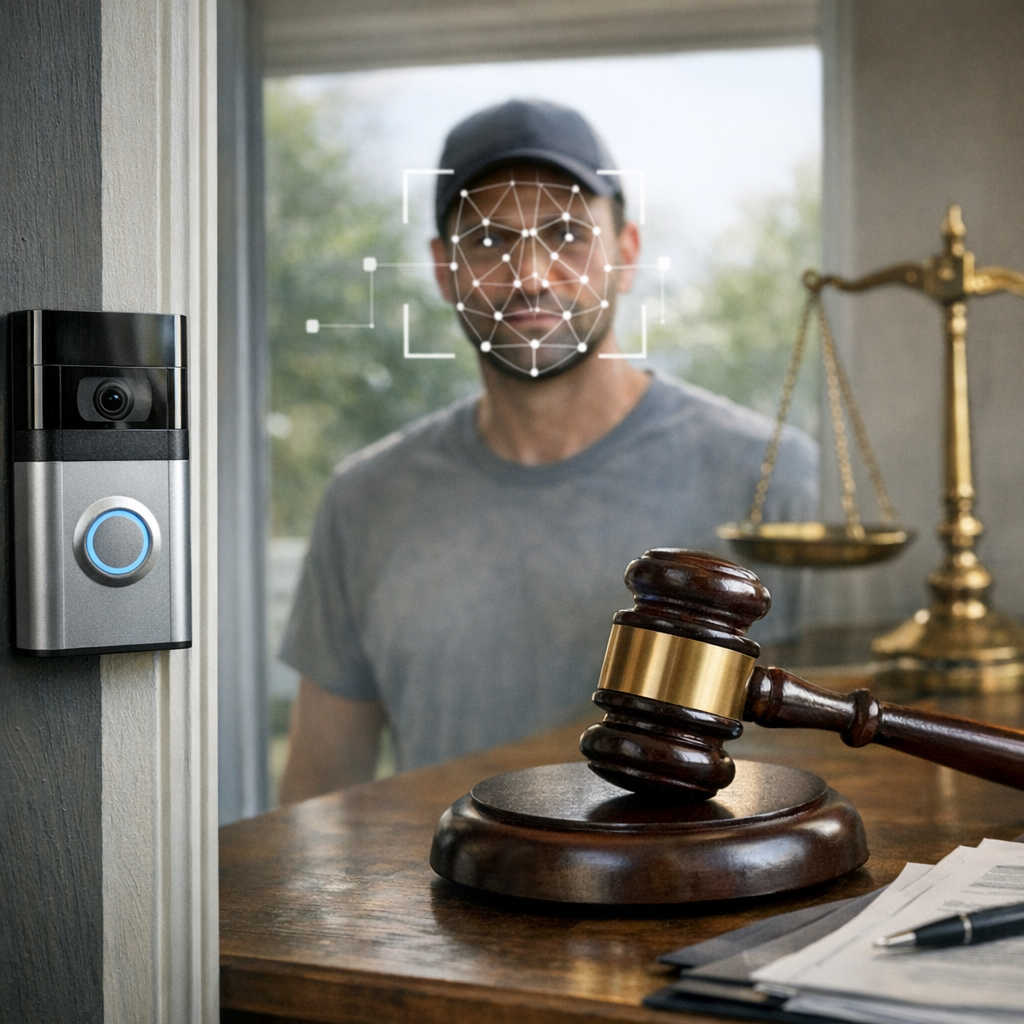
Amazon’s home security subsidiary Ring is facing renewed scrutiny over its data practices following a lawsuit that alleges improper use of facial recognition technology, intensifying longstanding concerns about privacy and surveillance tied to consumer doorbell systems.
According to the article titled “Amazon’s Ring sued over facial recognition feature, latest privacy concern for doorbell maker,” published by The Economic Times, the legal complaint accuses the company of deploying biometric capabilities without adequately informing users or obtaining proper consent. The suit reportedly centers on the collection and processing of facial data, raising questions about whether Ring’s practices comply with laws governing biometric information, particularly in jurisdictions with strict consent requirements.
The case adds to a series of controversies that have surrounded Ring in recent years, as critics have repeatedly questioned how footage captured through its devices is stored, analyzed, and shared. Privacy advocates argue that integrating facial recognition into widely distributed consumer devices risks normalizing continuous surveillance in residential neighborhoods. Concerns have been amplified by the possibility that such systems could identify individuals without their knowledge, potentially infringing on civil liberties.
Amazon has previously emphasized that Ring’s features are designed to enhance user security and that customers retain control over how their devices are configured. However, the lawsuit suggests that transparency alone may not be sufficient if biometric data is processed in ways that users do not fully understand or explicitly authorize.
Legal experts note that biometric privacy laws, such as those in Illinois, have become a focal point for litigation involving technology companies. These statutes typically require companies to disclose their data practices clearly and secure informed consent before collecting sensitive identifiers like facial scans. Violations can carry significant financial penalties, making such cases particularly consequential for firms deploying advanced recognition technologies.
The latest lawsuit underscores the broader tension between innovation in smart home security and the regulatory frameworks struggling to keep pace. While facial recognition can offer practical benefits, including improved identification of visitors or potential intruders, it also raises complex ethical and legal challenges about surveillance, data ownership, and individual rights.
As regulators and courts evaluate these issues, the outcome of the case against Ring could influence how biometric technologies are implemented across the consumer technology industry. For now, it serves as another signal that the balance between convenience and privacy remains unsettled, even in products designed for everyday use.