In its first driving impressions of Rivian’s forthcoming midsize electric SUV, Wired’s “Rivian R2 First Drive” portrays a vehicle that could prove pivotal to the company’s long-term viability, marking a shift from niche premium adventure models toward broader market appeal.
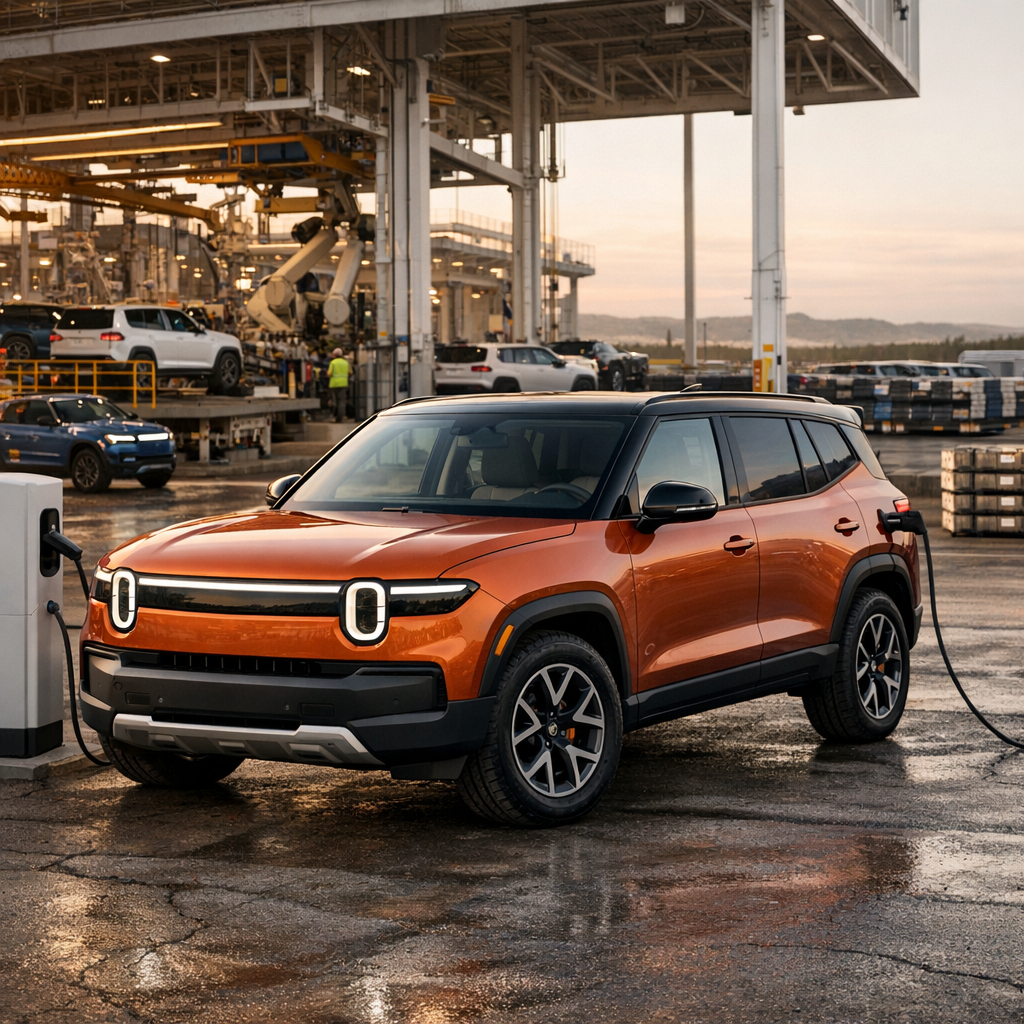
The R2 is positioned below Rivian’s existing R1T pickup and R1S SUV, both of which helped establish the company’s identity but have been constrained by high price points and a limited audience. As described by Wired, the R2 reflects a more streamlined and accessible approach without abandoning the brand’s outdoors-oriented ethos. Its design retains familiar Rivian cues—rounded lighting signatures and a clean, modern profile—while appearing more compact and urban-friendly than its predecessors.
According to the report, the driving experience emphasizes balance rather than extremity. While Rivian has built its reputation in part on powerful quad-motor configurations and off-road prowess, the R2’s tuning appears aimed at everyday usability. The vehicle delivers responsive acceleration and composed handling, but with a noticeable effort to smooth out ride quality for typical road conditions. This suggests a recalibration toward comfort and efficiency, priorities that become more pressing as Rivian targets a wider consumer base.
Wired notes that the interior continues Rivian’s preference for minimalism and tech integration, with an emphasis on digital interfaces and simplified controls. At the same time, materials and layout reflect cost-conscious decisions compared with the more premium R1 series. The result is a cabin that seeks to balance perceived quality with scalability, an essential consideration for a model expected to reach significantly higher production volumes.
One of the central themes in Wired’s assessment is the R2’s importance beyond its specifications. Rivian, like many electric vehicle startups, faces mounting pressure to achieve profitability while scaling production. The R2 is intended to be the company’s first true mass-market offering, with a starting price projected well below its current lineup. Success in this segment would broaden Rivian’s customer base and provide a more stable financial foundation, particularly as competition intensifies across the EV market, including dominant models like the Tesla Model Y.
The article also highlights the strategic timing of the R2’s debut. As legacy automakers and Tesla continue to expand their electric offerings—see, for example, GM’s EV lineup—Rivian must differentiate itself not only through design and performance but also through reliability, pricing, and production efficiency. The R2, in this context, functions as both a product and a test of operational maturity. Broader industry pressures, including investor scrutiny tracked by outlets like Reuters’ Rivian coverage, add urgency to its success.
While Wired’s early drive suggests the vehicle is promising, it stops short of definitive conclusions, noting that key factors such as real-world range—often evaluated using standards from agencies like the U.S. Environmental Protection Agency—pricing details, and production timelines will ultimately determine its impact. Nevertheless, the R2 is framed as a critical step in Rivian’s evolution—from a company defined by aspirational, high-end electric vehicles to one competing in a far more crowded and demanding segment of the automotive market.
If Rivian can deliver on the R2’s ambitions at scale, the model could reshape perceptions of the brand and play a decisive role in its future.