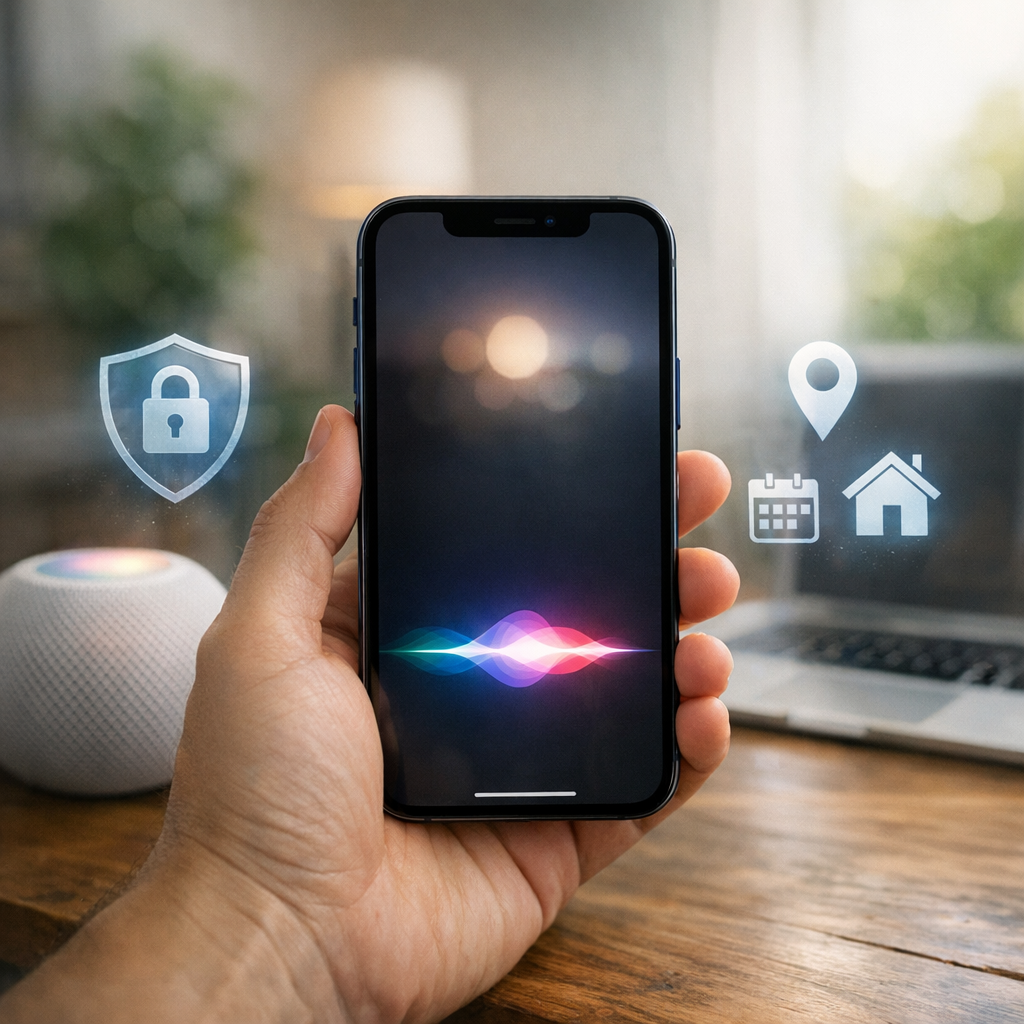
Apple’s long-promised transformation of Siri into a more context-aware, personalized assistant is moving closer to reality, signaling a shift in how users may soon interact with their devices. The developments were highlighted in Wired’s video segment, “Siri Is Finally Ready to Get Personal”, which details Apple’s efforts to modernize its voice assistant after years of criticism over its limitations compared to rival systems.
At the core of Apple’s update is a redesigned approach to artificial intelligence that leans heavily on on-device processing and deeper integration with personal data. Unlike earlier versions of Siri, which often struggled with multi-step reasoning or contextual understanding, the new system is built to interpret requests based on a user’s habits, communications, and real-time context. This could allow Siri to carry out more complex instructions, such as organizing travel plans using information from messages, calendars, and email, without requiring step-by-step input.
The Wired report emphasizes that Apple is attempting to balance personalization with its longstanding emphasis on privacy. Much of the data processing is expected to occur directly on users’ devices rather than in the cloud, a distinction the company sees as a competitive advantage. By minimizing the amount of personal data sent to external servers, Apple aims to deliver smarter assistance while maintaining tighter control over sensitive information.
The overhaul is also designed to address one of Siri’s most persistent weaknesses: its inability to sustain context across multiple requests. Historically, users have had to repeat details or simplify commands to get reliable results. The new system, as described in the Wired coverage, is intended to remember relevant details within a conversation and respond accordingly, bringing it closer to the kind of natural interaction now associated with advanced AI chatbots like modern generative AI systems.
Industry observers view the update as both a technological leap and a strategic necessity. Apple has faced mounting pressure as competitors integrate powerful generative AI into their products, raising expectations for what digital assistants should be able to do. Google and Microsoft, in particular, have pushed ahead with AI systems that can draft content, summarize information, and carry out complex queries with minimal user input. Apple’s challenge has been to match these capabilities without compromising its brand identity, which prioritizes user trust and data protection.
The Wired segment suggests that Apple’s approach may result in a more measured rollout. Rather than positioning Siri as an all-purpose chatbot, the company appears focused on making the assistant meaningfully useful in everyday tasks tied to the Apple ecosystem. This includes deeper integration across apps and services, enabling Siri to act as a central interface for managing personal information and device functions.
There are still open questions about how effectively the new system will perform in practice. Voice assistants have historically struggled with reliability, particularly when handling nuanced or ambiguous requests. The success of Apple’s upgrade will depend on whether it can deliver consistent, accurate results while maintaining the speed and simplicity users expect.
For now, the shift outlined in Wired’s “Siri Is Finally Ready to Get Personal” marks a significant moment in Apple’s AI strategy. It reflects a broader industry trend toward assistants that are not only more powerful but also more intimately connected to users’ digital lives. If Apple can execute on its vision, Siri may finally evolve from a basic voice interface into a genuinely intelligent companion.