Here is an HTML article: A recent report by Innovation News Network, titled “Diode laser pump sources for future fusion power plants,” highlights a critical but often overlooked component in the development of practical fusion energy: the laser systems that initiate and sustain the reaction. As global efforts intensify to make fusion a viable, carbon-free energy source, researchers are increasingly focusing not only on plasma physics but also on the efficiency, durability, and scalability of the technologies that power these systems.
In inertial confinement fusion (ICF), one of the leading approaches to achieving controlled fusion, powerful lasers are used to compress and heat fuel pellets to extreme temperatures and pressures. While experimental facilities such as the National Ignition Facility (NIF) in the United States have demonstrated significant milestones, including net energy gain under specific conditions, the challenge of translating such achievements into continuous, economically viable power generation remains substantial.
The article from Innovation News Network underscores that traditional laser systems used in fusion experiments are not yet suitable for power plant applications. These systems tend to be inefficient, energy-intensive, and limited in their repetition rates. For fusion to become a practical energy source, lasers must fire rapidly and reliably, with significantly higher efficiency and much lower operating costs.
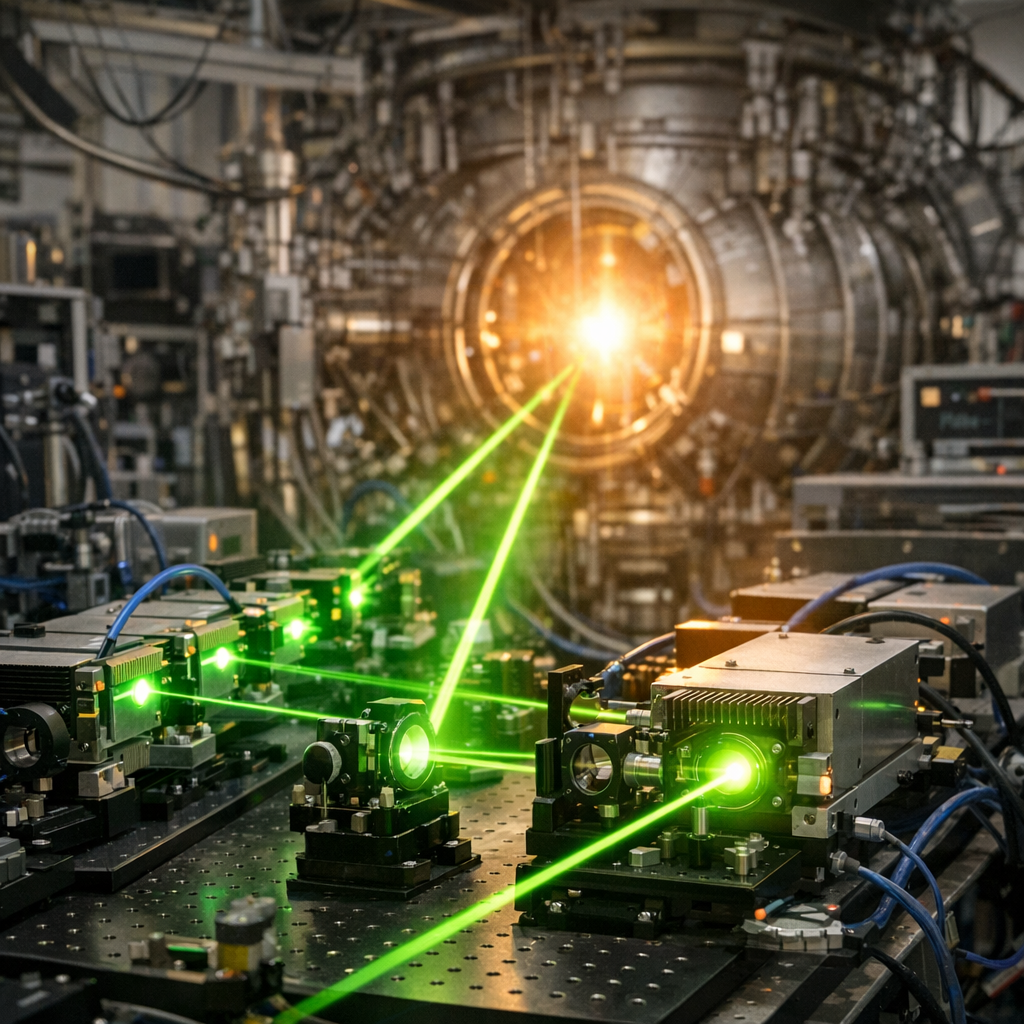
This is where diode laser pump sources come into focus. Unlike conventional flashlamp-pumped lasers, diode-pumped systems offer markedly improved electrical-to-optical efficiency. They also generate less waste heat, reducing the need for extensive cooling infrastructure and enhancing overall system reliability. According to the report, these characteristics make diode lasers a promising candidate for powering the next generation of high-repetition-rate fusion facilities.
However, scaling diode laser technology to meet the demands of fusion power plants presents its own set of challenges. Fusion applications require not only high peak power but also consistent performance over billions of cycles. This places stringent requirements on the longevity and robustness of diode components. Researchers are therefore working to improve both the manufacturing processes and the materials used in these systems to ensure they can withstand the extreme operational conditions.
Another key issue is cost. While diode lasers are already widely used in industrial and medical applications, achieving the necessary scale for fusion energy production will require significant cost reductions. The Innovation News Network article points out that advances in semiconductor fabrication and economies of scale could help drive down prices, making large arrays of high-performance diode lasers more economically feasible.
The integration of diode laser pump sources into fusion systems also has implications for overall plant design. More efficient lasers can reduce the total energy input required to achieve fusion conditions, improving the net energy gain and making power plants more competitive with existing energy sources. Additionally, compact and modular laser architectures could enable more flexible and scalable reactor designs, potentially accelerating the deployment of fusion technology.
Despite these promising developments, experts caution that diode laser innovation is only one piece of a much larger puzzle. Achieving commercial fusion power will require coordinated progress across multiple disciplines, including plasma confinement, materials science, and energy conversion systems. Nevertheless, improvements in laser technology are widely recognized as a critical enabling factor.
The Innovation News Network report makes clear that while fusion energy has long been viewed as a distant goal, incremental advances in supporting technologies such as diode laser pump sources are steadily bringing it closer to reality. As research continues and investment grows, the performance and affordability of these systems will play a decisive role in determining whether fusion can fulfill its promise as a sustainable, large-scale energy solution.