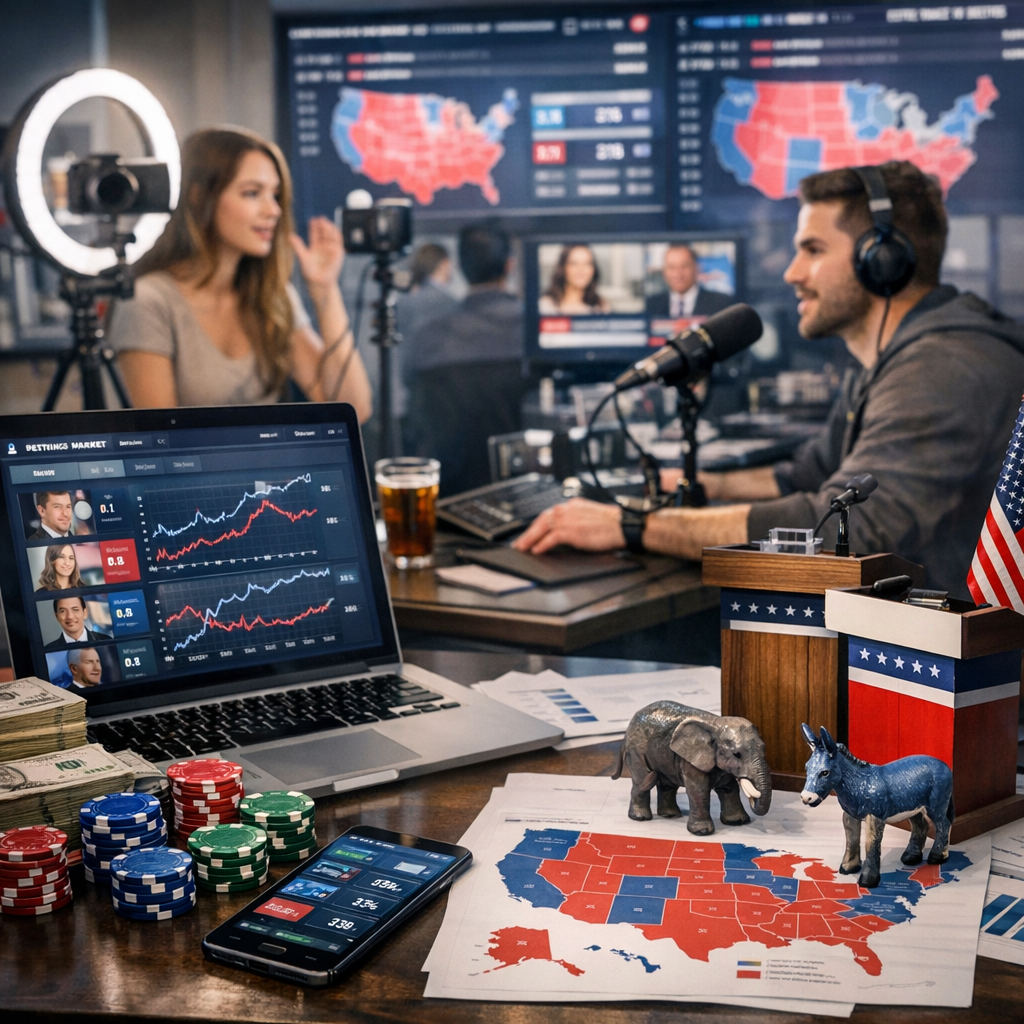
A growing convergence between online prediction markets and politically charged influencer culture is drawing scrutiny, as platforms that allow users to wager on real-world events intersect with personalities known for amplifying controversial narratives. The dynamic is explored in Wired’s article, “Kalshi, Polymarket, and the Influencer Election Denial Machine”, which reports on how figures such as Spencer Pratt have engaged with prediction markets in ways that blur the line between speculation, promotion, and political messaging.
Prediction markets like Kalshi and Polymarket enable users to trade contracts tied to the likelihood of future events, including elections. While proponents argue these markets can provide valuable signals about public expectations, critics warn they may also incentivize the spread of misleading claims, particularly when influencers with large followings become involved. Wired’s reporting highlights how these platforms can become entangled with narratives questioning election legitimacy, raising concerns about their broader societal impact.
According to the article, influencers have used their social media reach to draw attention to specific market positions, sometimes framing bets in a way that reinforces doubts about electoral processes. This behavior can create feedback loops in which online speculation and political rhetoric amplify one another. Even when framed as entertainment or financial speculation, such activity may shape public perception by lending a veneer of market-based credibility to contested claims.
Regulatory ambiguity adds another layer of complexity. Kalshi operates as a federally regulated exchange in the United States under the oversight of the Commodity Futures Trading Commission (CFTC), while Polymarket has faced regulatory challenges and restrictions on U.S. users. The Wired article underscores how differing oversight frameworks may leave gaps, particularly as platforms evolve and attract new types of participants. Authorities have struggled to determine how existing rules on financial markets, gambling, and political activity should apply to these hybrid systems.
Experts cited in the report note that prediction markets are not inherently problematic, but their influence depends heavily on context and use, a point often discussed in research on prediction markets. When tied to high-stakes political events, especially elections, they can become vehicles for narratives that extend beyond simple forecasting. The involvement of influencers, who may prioritize engagement over accuracy, intensifies these risks.
At the same time, defenders of prediction markets argue that they reflect aggregate sentiment rather than dictate it, and that attempts to restrict them could stifle innovation. They contend that transparency and improved moderation, rather than outright prohibition, are more effective ways to address concerns about misinformation.
Wired’s examination suggests that the intersection of finance, social media, and politics is producing new challenges that policymakers and platform operators have yet to fully confront. As the next election cycle approaches, the role of prediction markets—and the influencers who promote them—is likely to remain a contentious and closely watched issue.