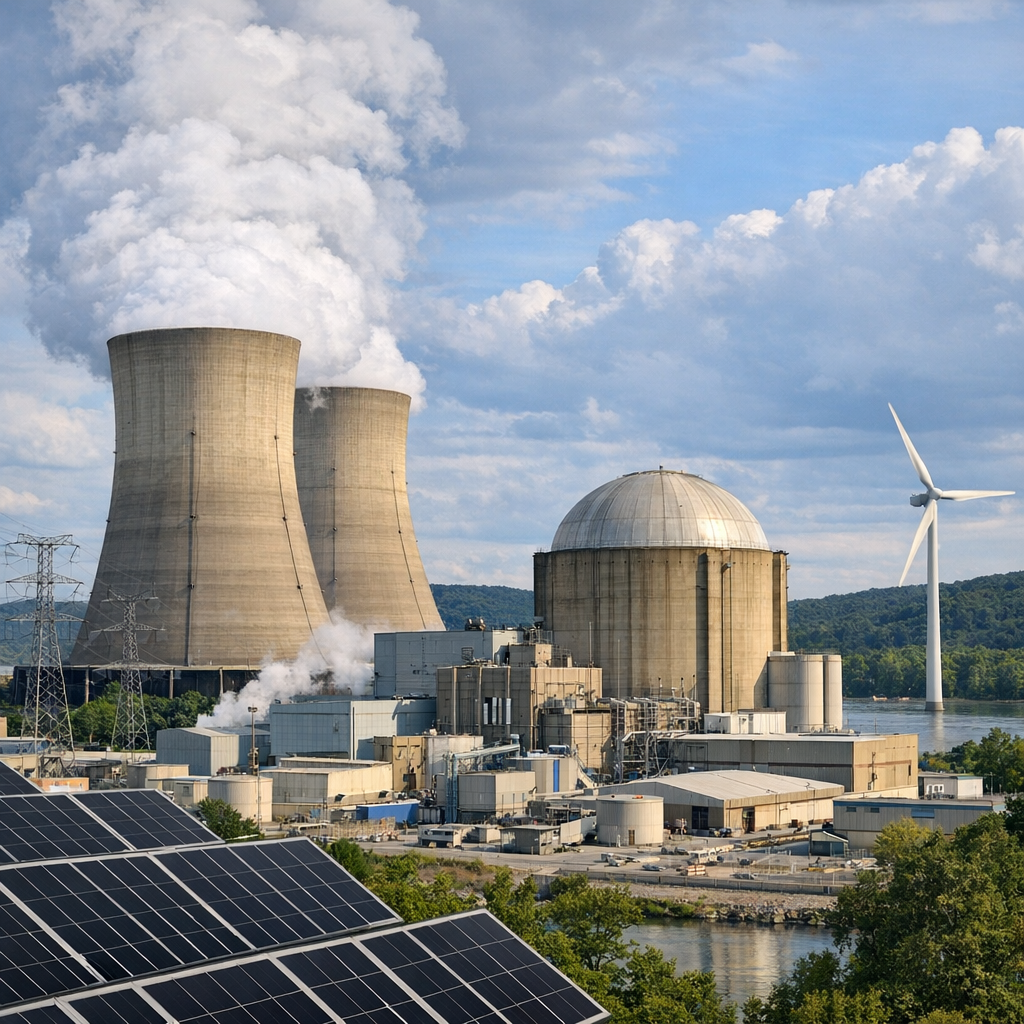
Plans to restart a reactor at the Three Mile Island nuclear power station in Pennsylvania have taken a significant step forward, underscoring the renewed role nuclear energy may play in meeting rising electricity demand and decarbonisation goals in the United States.
According to the article “Three Mile Island reactor restart moves closer”, published by Innovation News Network, progress is being made toward bringing Unit 1 of the site back online, years after it was shut down for economic reasons. The development reflects a broader shift in the energy landscape, where previously retired nuclear assets are being reconsidered amid growing pressure to secure stable, low-carbon power supplies.
Three Mile Island occupies a symbolic place in the history of nuclear energy in the United States. While Unit 2 was the site of a partial meltdown in 1979, Unit 1 operated safely for decades before closing in 2019 due to financial losses, largely driven by competition from cheaper natural gas and subsidised renewables. The current effort focuses exclusively on Unit 1, which remains structurally intact and potentially capable of being recommissioned with sufficient investment and regulatory approval. More information on the 1979 accident is available from the U.S. Nuclear Regulatory Commission.
The renewed interest in the plant is closely tied to surging electricity demand, particularly from energy-intensive industries such as data centers and artificial intelligence infrastructure. Large technology companies have increasingly sought long-term, carbon-free power sources that can provide consistent output, a requirement that intermittent renewables alone struggle to meet without extensive storage solutions. Nuclear power’s reliability and low emissions profile have therefore regained attention after years of decline, as highlighted by the International Energy Agency.
Developers and policymakers are now working through the technical, financial, and regulatory challenges involved in restarting a reactor that has been offline for several years. These include updating safety systems, securing fuel supply arrangements, and ensuring compliance with modern regulatory standards set by the U.S. Nuclear Regulatory Commission. While the process is expected to take several years, proponents argue that restarting existing facilities is faster and more cost-effective than building new reactors from scratch.
The economic viability of the project remains a central concern. Previous closures of nuclear plants, including Three Mile Island Unit 1, were largely driven by unfavorable market conditions. Any restart would likely depend on long-term power purchase agreements or policy mechanisms that recognize the value of carbon-free baseload generation. Without such support, operators could again face financial pressures despite improved demand outlooks, a challenge also discussed by the U.S. Department of Energy.
Public perception also continues to shape the debate. Although nuclear energy has seen a resurgence in policy discussions as a clean energy source, safety concerns linked to historic incidents linger, particularly in communities near legacy sites like Three Mile Island. Supporters of the restart emphasize advances in safety protocols and the strong operational history of Unit 1 prior to its closure, while critics remain wary of potential risks and the long-term management of radioactive waste, an issue explored by the World Nuclear Association.
The movement to revive the reactor is part of a broader trend across the United States and other countries exploring life extensions or restarts of nuclear assets. As governments pursue aggressive emissions reduction targets, nuclear power is increasingly viewed as a complement to renewable energy, providing grid stability alongside wind and solar.
While no final decision has been confirmed, the developments outlined in Innovation News Network’s report suggest that momentum is building. Whether the project ultimately proceeds will depend on a complex interplay of regulatory approvals, market conditions, and political support, but its progress signals a notable shift in how nuclear energy is being reconsidered in the transition to a low-carbon economy.